


In the early stages of gum disease—stage 1 or 2—it’s completely reversible. After a professional dental cleaning and four important dog periodontal disease treatment steps at home, gums can return to a healthy pink with no swelling or bleeding. But once it progresses to stage 3 or 4, things change. You can still slow inflammation, but bone and tissue that are already lost won’t grow back.

I have three dogs, and I keep them on what I call a five-step oral health routine—and it’s worked. None of them have developed gum disease. But a friend of mine adopted a rescue Alsatian with stage 2 gum disease, and using the same protocol I use (plus an extra step I’ll mention below), she managed to reverse it completely.
The point is this—whether your dog has stage 1, 2, 3, or even 4 gum disease, you don’t need to worry—something can always be done about it.
What You Can and Should Do at Home: Five Steps to Reversing Gum Disease
Periodontal disease is the most common clinical condition affecting adult dogs: by age three, more than 80% show some form of periodontal disease. That means chronic gum inflammation, pockets of bacteria, bone loss around teeth and, often, pain. However, this is treatable—and there’s a clear division between what your veterinarian must do and what you can—and should—do at home.
Below are five steps to fight plaque, reverse gum disease, and keep your dog comfortable. I use these steps together—not as alternatives to each other.
1) Brush Daily With Enzymatic Toothpaste
I’m not a fan of those silicone finger toothbrushes for dogs, though I know some people like them. I prefer the regular brushes—the ones that look like human toothbrushes but with a smaller, angled head. My two favorites: the Arm & Hammer toothbrush and the Virbac toothbrush. I’ve got about seven of them stashed in my cupboards (three dogs here) and use them daily.
That said, brushing is the single most effective thing you can do to stop gum disease from worsening. You should aim to brush your dog’s teeth every day with enzymatic toothpaste, focusing on the gumline.
Of course, how you brush is important, but it’s easy enough to get the hang of. Keep each brushing session short (around 3 minutes), use gentle circular motions, and hold the brush at a slight angle—about 45 to 60 degrees.
Ultimately, if your dog has any stage of gum disease, you should brush their teeth every day.
2) Use Veterinarian-Recommended Chlorhexidine Rinse
Chlorhexidine is an antibacterial oral rinse that helps control plaque and reduce inflammation in the gums. It’s not toothpaste and doesn’t replace brushing—it works alongside brushing.
When you brush, you’re physically removing plaque. Chlorhexidine, on the other hand, kills bacteria that brushing might miss, especially under the gumline or in hard-to-reach spots.
For dogs with any stage of gum disease, it’s often recommended because it helps slow bacterial growth and gives the gums a chance to heal. It’s typically used once or twice daily for about two to four weeks. However, it’s not something most healthy dogs need long-term—too much use can cause staining on the teeth. In fact, I only use chlorhexidine once or twice a month on my dogs’ teeth, but my dogs don’t have gum disease.
3) Add VOHC-Accepted Dental Chews
Dental chews help clean your dog’s teeth between brushings by scraping away plaque and tartar. I prefer chews with the Veterinary Oral Health Council (VOHC) seal of acceptance—it means the product’s been tested and proven to help control buildup.
However, I like to switch things up and alternate between three types of dental chews to give my dogs variety: Virbac Veggiedent Chews (VOHC stamped), Ark Naturals Dental Chews, and Finn Plaque Control Dental Chews.
Do you have a small dog or a big dog? Make sure you pick chews that suit your dog’s size, and always keep an eye on them while they chew.
Most importantly, dental chews support brushing; they don’t replace it.
4) Oral Probiotics for Healthy Microbiome
Certain probiotic strains change the oral microbiome away from disease-causing bacteria in dogs. Of course, probiotics won’t replace brushing, but they strengthen your dog’s natural defenses against gum disease and help the tissues heal faster.
Are probiotic powers popular? Absolutely. Are they novel? No. Thousands of packs fly off the shelves every day. The best ones are Native Pet’s Clean Breath Powder, Commanding Life’s Pet Dental Cleaning Powder, and Itecfreely’s Dental Cleaning Powder.
You can use probiotics daily for about four to six weeks while treating gum disease, then reduce the frequency to a few times per week for maintenance. A good routine is to brush your dog’s teeth in the morning with enzymatic toothpaste, use the chlorhexidine rinse afterward, and then wait at least 30 to 60 minutes before giving the probiotic. Many owners find it easiest to sprinkle the probiotic powder onto food at dinner time.
5) Professional Cleanings
If a dog has healthy gums and clean, white teeth, professional dental cleanings aren’t usually needed right away. Regular brushing, dental chews, and vet checkups are enough to maintain good oral health. However, most vets still recommend a professional cleaning every 12 to 18 months to remove plaque and tartar from under the gumline—areas you can’t reach with brushing. This helps prevent gum disease from developing later on.
Of course, if a dog already has stage 1 to 4 dental disease, then yes, a dental cleaning is necessary. Brushing alone can’t remove hardened tartar or bacteria trapped below the gums. Stage 1 and 2 cases often need a basic cleaning and polishing under anesthesia, while stage 3 and 4 require deeper scaling and sometimes extractions if teeth are loose or infected.
In short, once gum disease is present, a professional dental cleaning becomes essential to stop progression and protect your dog’s overall health.
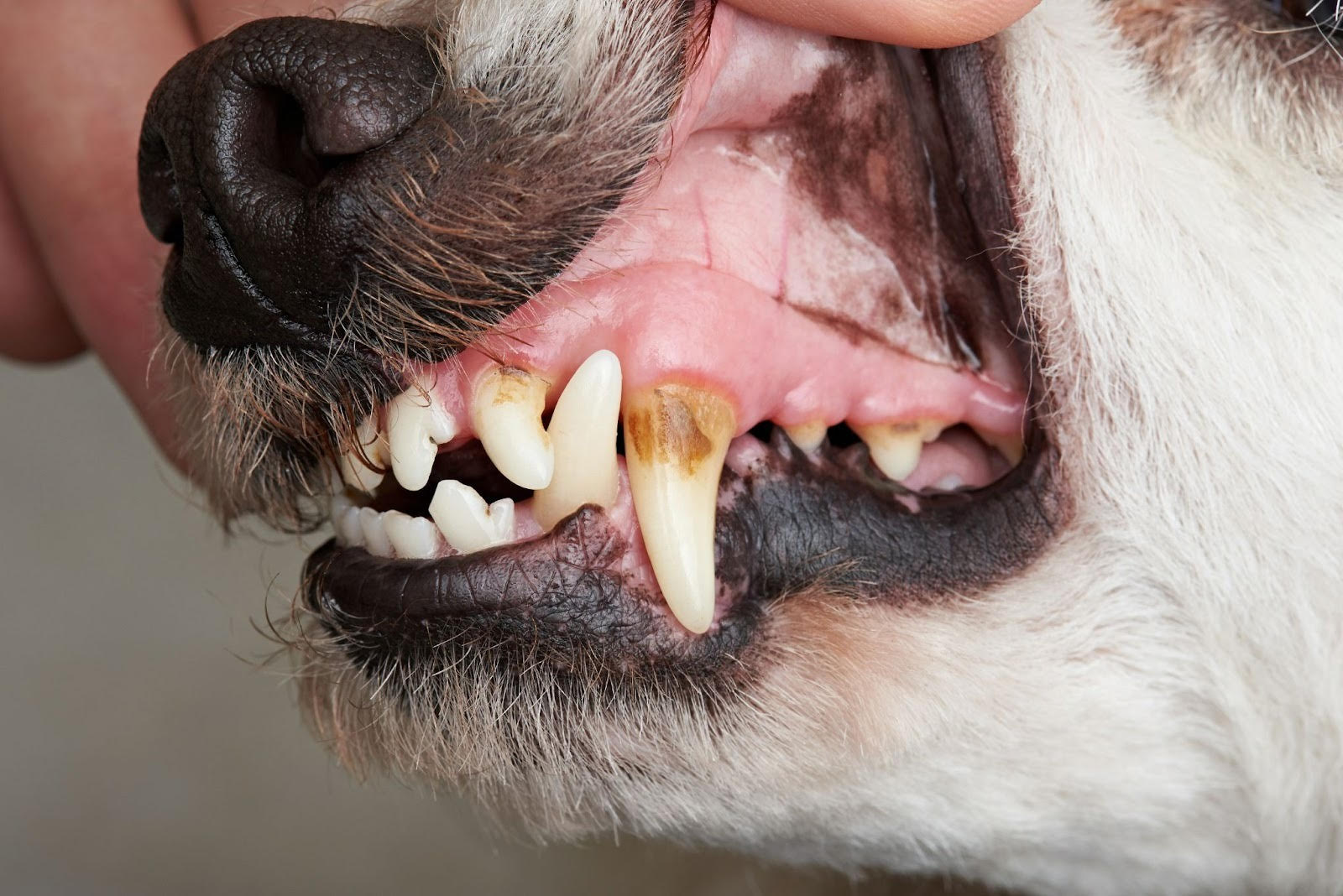
What the Vet Can (and Should) Do: Professional Periodontal Therapy
When periodontal disease advances beyond early gingivitis, a veterinarian or veterinary dentist performs procedures that must be done under anesthesia:
- Comprehensive exam and dental charting—full-mouth x-rays to assess root and bone health.
- Scaling and polishing—removal of supragingival and subgingival plaque and calculus with ultrasonic and hand instruments.
- Root planing and curettage / perioceutic therapy—smoothing root surfaces, removing infected tissue, irrigating pockets, and applying local antimicrobials or gels when indicated.
- Extractions or endodontic therapy—for teeth that are too damaged to save.
- Advanced procedures—guided tissue regeneration, bone grafts, or flap surgeries for severe pockets (performed by specialists).
A Practical Plan You Can Start Today
- Schedule an exam and dental x-rays if your dog hasn’t had them in the last year.
- Start a slow brushing routine: 1–3 minutes daily; praise and treats after.
- Add a VOHC chew or water additive daily.
- Ask your vet about a short course of chlorhexidine after professional cleaning.
- Consider an oral probiotic as an additional measure.
You Can and Will Reverse Your Dog’s Gum Disease
Periodontal disease is common—but it’s reversible. Brushing every day, using the right toothpaste, and keeping up with regular vet checkups help keep bacteria under control and gums on the path to recovery. Within weeks, you’ll start noticing healthier gums, fresher breath, and a happier dog.
Frequently Asked Questions About Best Dog Periodontal Disease Treatment
If a dog undergoes a full professional cleaning and polishing at the vet, can the gum disease then be reversed through consistent at-home care—daily brushing, antimicrobial rinses, dental chews, and probiotics?
Yes—but in veterinary dentistry, the post-cleaning stage is critical because the professional cleaning removes tartar, plaque, and early disease deposits that at-home care alone can’t handle. After that, a consistent home regimen can maintain gum health and reverse mild gum issues, but it depends on the stage of the disease.
If a dog has stage 1 gum disease but never goes to the vet for a professional cleaning, can the condition still reverse with consistent at-home care—daily brushing, chlorhexidine rinses, enzymatic toothpaste, dental chews, and probiotics?
At stage 1, yes—you can often reverse gum disease at home if you’re thorough and consistent.
At this stage, the problem is limited to plaque and mild gingivitis, not hardened tartar or bone loss. The gums may look a little red or bleed slightly when brushed, but the damage is still surface-level. Daily brushing with an enzymatic toothpaste, paired with chlorhexidine rinses and VOHC-approved chews, can remove the bacterial film and let the gums heal. Probiotics can also help rebalance oral bacteria, supporting that recovery.
If you stick with it—brushing every day, using proper technique, and watching for improvement—the inflammation can disappear completely within a few weeks. The gums return to a healthy pink, tight around the teeth, and the disease is effectively reversed.