

A 2019 study compared a 10% nano-hydroxyapatite toothpaste against a fluoride one. The result was that the hydroxyapatite toothpaste showed a 55.8% remineralization rate, while the fluoride formula showed 56.9%. Statistically, this is considered equivalent. That said, when patients ask me for the best 10 nano hydroxyapatite toothpaste, there’s one I recommend first.
As a dentist, I test many nano-hydroxyapatite toothpastes, but I don’t recommend one unless I see real results. If patients press me to pick the best 10% nano hydroxyapatite toothpaste for stronger enamel, I point them toward the one I use: Klyyr’s hydroxyapatite toothpaste. This is the toothpaste I keep recommending, based on my own results, patients’ feedback, and conversations with colleagues.
Affiliate Disclosure: As an Amazon Associate, I earn from qualifying purchases. This post includes sponsored products from Amazon Creator Connections. I may earn commissions at no extra cost to you.
Our Top Picks
Klyyr 10% nano- and micro-hydroxyapatite toothpaste: Best Overall (Shop Now) →
Genvyne 10% nano hydroxyapatite toothpaste: Runner-Up (Shop Now) →
Davids 10% nano hydroxyapatite toothpaste: Best Seller (Shop Now) →
Mouthology 10% nano hydroxyapatite toothpaste: Most Innovative (Shop Now) →
5 Best 10% Nano Hydroxyapatite Toothpastes of 2026
10% Nano and Micro Hydroxyapatite Toothpaste
Best Overall
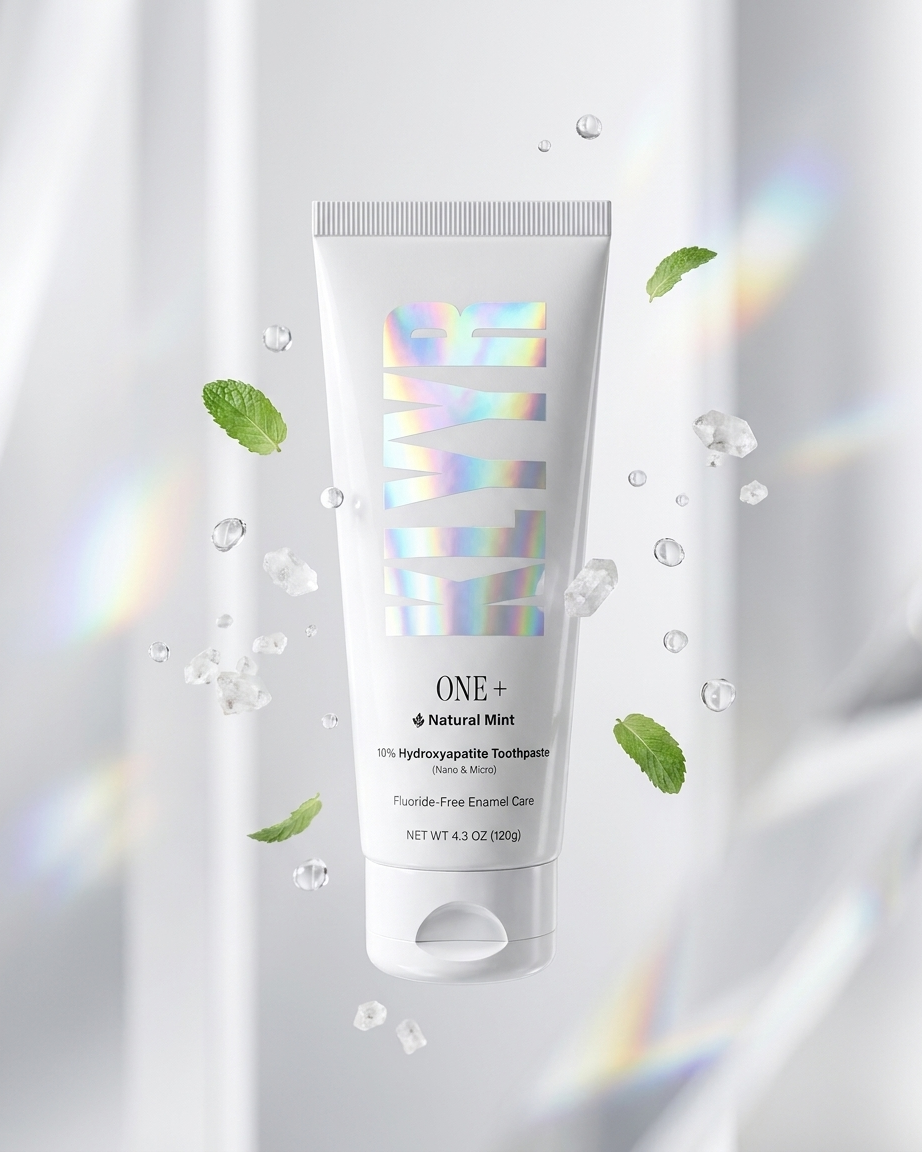
When you use the Klyyr hydroxyapatite toothpaste, by day 14, your teeth will start to gleam. You’ve heard of nano-hydroxyapatite, but what happens when you use a nano- and micro-hydroxyapatite toothpaste? This formula uses hydroxyapatite in a more advanced way. In a double-blind study involving 212 people, 92% showed measurable remineralisation of tooth enamel.
But why is nano- and micro-hydroxyapatite more effective than nano alone? Micro-hydroxyapatite is a larger mineral cluster that stays on the enamel surface, fills visible texture, smooths the bite, and buffers the everyday acid exposure that wears teeth down. Nano-hydroxyapatite, by contrast, is ultra-fine, rod-shaped crystals that are small enough to mimic the mineral structure of natural enamel—and small enough to reach into microscopic defects you can’t see. They are both enamel-like minerals. One is small enough to slip into the cracks. And one stays on the surface and seals it. Klyyr put both in the tube—at 10% concentration—because remineralisation has two layers.
Why Dentists Trust It
✔ Results from a double-blind study involving 212 participants:
✔ 92% showed measurable remineralisation
✔ 96% reported less sensitivity within 14 days
✔ Clinical whitepaper available from the brand
✔ Based in the USA
Noteworthy
- ~ Micro-hydroxyapatite builds a thin, glassy layer over enamel
~ 4.8-star rating from 2,418 people
~ 10% nano- and micro-hydroxyapatite
~ 120 g tube provides approximately 90 brushings
Genvyne 10% Nano Hydroxyapatite Toothpaste
Runner-Up

Patients keep buying the Genvyne nano hydroxyapatite toothpaste for three reasons: they see and feel results, the tube and lid feel well-made, and the price is affordable.
By the 31st of this month alone, more than 2,000 packs had already sold. That tells you people aren’t just trying this toothpaste once—they’re buying it again and again. That said, our team voted this brand the runner-up 10% nano hydroxyapatite toothpaste of 2026.
Why Dentists Trust It
✔ 4.5-star rating
✔ 2,000 tubes sold this month
✔ Contains 10% nano-hydroxyapatite
✔ Noticeable whitening without fluoride
✔ Trustworthy, reputable brand
Noteworthy
- ~ If the 3-pack is sold out, the 2-pack is usually in stock
Davids 10% Nano Hydroxyapatite Toothpaste
Best Seller

The David’s 10% nano hydroxyapatite toothpaste is popular. And I recommend it daily. The main difference is the supporting ingredients: David’s includes xylitol, baking soda to neutralize acids and reduce plaque, and a carefully controlled abrasivity (RDA 101) that stays enamel-safe for daily use. It’s also fluoride-free, SLS-free, EWG Verified, and made in the USA. With a 4.5-star rating from nearly 20,000 users, it’s one of the most trusted fluoride-free remineralizing toothpastes available today.
Ultimately, I find that David’s is one of the strongest 10% nano-hydroxyapatite toothpaste options for teenage boys. The name helps because it’s a guy’s name, so boys tend to connect with it faster.
Why Dentists Trust It
✔ Whitening + uses nano-hydroxyapatite to help remineralize enamel
✔ Fluoride-free and SLS-free for sensitive mouths
✔ Targets sensitivity by strengthening enamel
✔ Enamel-safe RDA of 101 for daily whitening and plaque removal
✔ Contains birch-derived xylitol to reduce acid-producing bacteria
✔ EWG Verified and Climate Pledge Friendly
✔ Made in the USA with plant- and earth-derived ingredients
Noteworthy
- ~ 40K+ people bought it this month—and it holds a 4.5-star rating across nearly 20,000 reviews
Mouthology 10% Nano Hydroxyapatite Toothpaste
Most Innovative

Yahoo Health ranked the Mouthology 10% nano hydroxyapatite toothpaste as its #1 natural toothpaste in September 2025. And it regularly appears on “best toothpaste” roundups, whether you’re reading expert reviews or scrolling through Reddit threads where users share their results. Why’s it so popular? It checks the three boxes that make a best-selling toothpaste: a quality formula, clean and practical packaging, and a price point people are comfortable paying again and again.
Just this month—and it’s only the 17th—it’s already sold over 1,000 three-packs, which tells you people aren’t just trying it once; they’re stocking up and coming back for more.
Why Dentists Trust It
✔ 4.6-star rating
✔ Fluoride- and LS-free
✔ Includes birch xylitol to help reduce cavity-causing bacteria
✔ Includes calcium carbonate + hydrated silica for whitening
✔ Peppermint + menthol flavor for strong breath freshness
✔ Made in the USA
Noteworthy
- ~ Contains 10% nano-hydroxyapatite
Medical Disclaimer: This article is for informational purposes only and does not replace professional medical advice, diagnosis, or treatment.
How to Choose the Best 10% Nano Hydroxyapatite Toothpaste
Not all nano-hydroxyapatite toothpastes are created equal. The label may say “10%,” but formulation details, supporting ingredients, and manufacturing standards make a meaningful difference. These are the criteria dentists actually look at when recommending one over another.
1. Confirm the Concentration Is Truly 10%
Many toothpastes list nano-hydroxyapatite without disclosing the percentage. The 2019 non-inferiority study that showed equivalent performance to fluoride used a full 10% concentration—not trace amounts.
That’s one reason Mouthology often comes up in dentist discussions. The percentage is clearly stated, and it matches the concentration used in published clinical research. When patients ask whether “lower percentages still work,” the honest answer is that the strongest data we have is tied to 10%.
2. Look at the Supporting Ingredients
Nano-hydroxyapatite does the heavy lifting, but the additional ingredients influence comfort, whitening, and long-term compliance.
Dentist-recommended formulas often include:
- Xylitol to reduce acid-producing bacteria
- Hydrated silica or calcium carbonate for gentle stain removal
- SLS-free surfactants to avoid irritation
Mouthology checks these boxes without overloading the formula. That balance matters—especially for patients with sensitivity or dry mouth.
3. Fluoride-Free Does Not Mean “Weaker”
This is a common misconception. Nano-hydroxyapatite works differently from fluoride. Instead of altering enamel chemistry, it physically fills microscopic defects and bonds to the tooth surface.
Because n-HAP is chemically identical to enamel, it integrates rather than coats. That mechanism is why many dentists are comfortable recommending it to:
- Children who may swallow toothpaste
- Adults avoiding fluoride for personal or medical reasons
- Patients with early enamel erosion
A toothpaste like Mouthology is often chosen precisely because it offers strength without relying on fluoride.
4. Manufacturing Quality and Transparency
Dentists tend to trust brands that disclose:
- Ingredient sourcing
- Manufacturing country
- Clear labeling
Mouthology’s U.S. manufacturing and disclosed ingredient list are small details that quietly build confidence over time. Patients notice these things, even if they don’t articulate them at first.
5. Patient Feedback Over Time
When a toothpaste gets reordered in multi-packs—as Mouthology does—it usually means two things: people feel a difference, and they stick with it. That pattern aligns closely with what dentists hear chairside.
Best 10% Nano Hydroxyapatite Toothpaste FAQs
What is the best nano hydroxyapatite toothpaste 10 percent?
The best 10% nano-hydroxyapatite toothpaste I recommend is Klyyr. It uses the same 10% concentration studied against fluoride toothpaste, has a 4.6-star rating, and has become the one I keep coming back to when patients ask for a fluoride-free toothpaste.
What toothpaste has 10 nano hydroxyapatite?
Klyyr is the toothpaste I use because it uses 10% nano-hydroxyapatite. That matters because some toothpastes mention hydroxyapatite without stating the percentage. MySmile and Davids also offer 10% nano-hydroxyapatite, but Klyyr’s is my first pick overall.
What is the best 10 nano hydroxyapatite toothpaste?
For me, the best 10% nano-hydroxyapatite toothpaste is Klyyr. It’s fluoride-free, SLS-free, made in the USA, and includes birch xylitol, calcium carbonate, and hydrated silica.
Is 10 nano hydroxyapatite toothpaste safe?
Yes, 10% nano-hydroxyapatite toothpaste is considered safe when used as directed. A 2019 study found that 10% nano-hydroxyapatite performed on a similar level to fluoride for remineralization. It’s also useful for people who want to avoid fluoride or for children who may swallow small amounts of toothpaste.
What are 10 nano hydroxyapatite toothpaste brands?
The 10% nano-hydroxyapatite toothpaste brands I’d look at first are Klyyr, MySmile, Davids, and IZKUT. Mouthology is my top recommendation because it uses 10% nano-hydroxyapatite and the brand is reputable.
What are nano hydroxyapatite toothpaste brands?
Some of the better-known nano-hydroxyapatite toothpaste brands include Klyyr, MySmile, Davids, and IZKUT. If you want the 10% concentration specifically, I’d pick Mouthology, then compare MySmile and Davids depending on price and flavor.
How to use nano hydroxyapatite toothpaste?
You use nano-hydroxyapatite toothpaste the same way you use regular toothpaste: brush for 2 minutes, twice a day. For best results, spit after brushing but don’t rinse heavily with water. Leaving a thin layer behind gives the nano-hydroxyapatite more time to sit on the enamel and support remineralization.
Can 10% nano-hydroxyapatite replace fluoride toothpaste?
For many people, yes. Clinical data shows comparable remineralization performance. Dentists often recommend Genvyne as a fluoride alternative for patients who want similar protection without fluoride exposure.
Does nano-hydroxyapatite whiten teeth?
It does not bleach. Instead, it fills microscopic enamel defects, making the surface smoother and more reflective. Users of Genvyne often describe their teeth as looking brighter and feeling smoother within a few weeks.
Is this toothpaste suitable for children?
Yes, especially because it’s fluoride-free. Genvyne is commonly recommended for children who haven’t mastered spitting yet, though parents should still supervise brushing.
How long does it take to notice results?
Most patients report smoother enamel within 1–2 weeks. Sensitivity improvement often follows shortly after. Like fluoride, consistency matters more than speed.
Does a higher percentage than 10% work better?
There is currently no strong clinical evidence showing that concentrations above 10% provide additional benefit. Ten percent remains the most studied and clinically supported concentration, which is why dentists tend to stick with it.
Author

Dr. Rossouw holds a BChD (Pret), HONS (Medunsa), and MChD (Medunsa), completed cum laude. He is an Associate Professor with 12 publications and a professional background spanning public health, epidemiology, health systems, and health economics.
He has consulted to SADC countries in epidemiology and health economics, served as Clinical Director at the Institute for Health Economics and Technology Innovation, and was registered as a specialist in Public Health, Health Systems, and Epidemiology.