


You must be careful when buying an autoclave. Many sterilizers use phrases like “advanced steam” or “medical grade.” Those words sound good. But you must ask yourself one important question: is it Class B? If you work in dentistry, you work with blood. And blood means real exposure to hepatitis B, hepatitis C, HIV, and other pathogens.
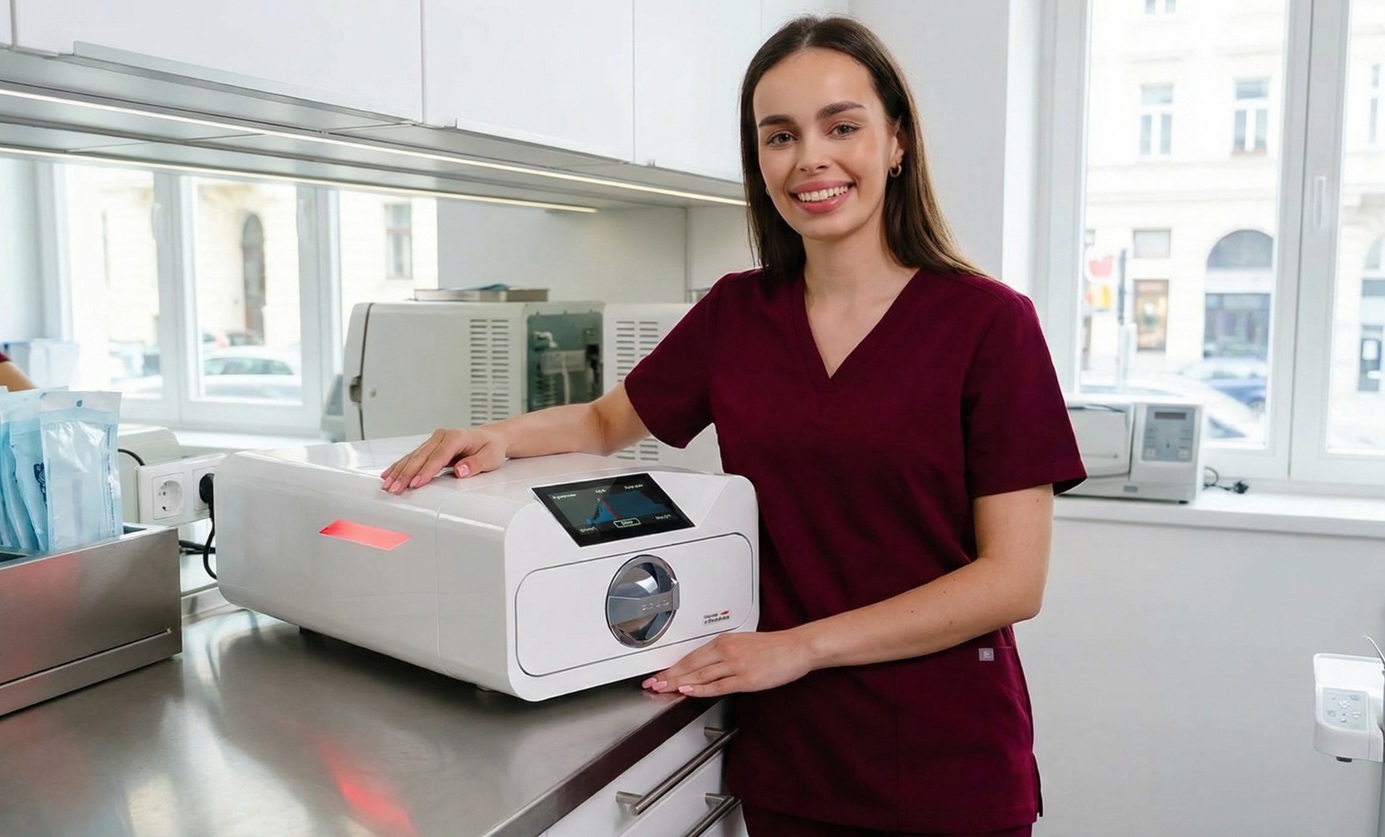
Dentists work directly with blood, saliva, tissue, and sharp instruments. Every instrument that touches blood carries an infection risk. Is Class B required by law for dentists? In America, YES. Dental practices are legally required to sterilize hollow instruments (handpieces, scalers, suction tips). Because only Class B autoclaves can properly sterilize hollow instruments, the law effectively makes Class B mandatory. Even when the regulation doesn’t literally say “You must use Class B,” it says: “Hollow instruments must be sterilized by vacuum autoclave.” Which = Class B.
So for dentists, the requirement is effectively legal. Out of the five best-selling autoclaves, I ranked the Enbio S Class B Autoclave best in the industry based on my experience and colleague feedback—echoed by dentists worldwide.
8 Best Class B Autoclaves of 2026
Enbio S Autoclave
Best Overall
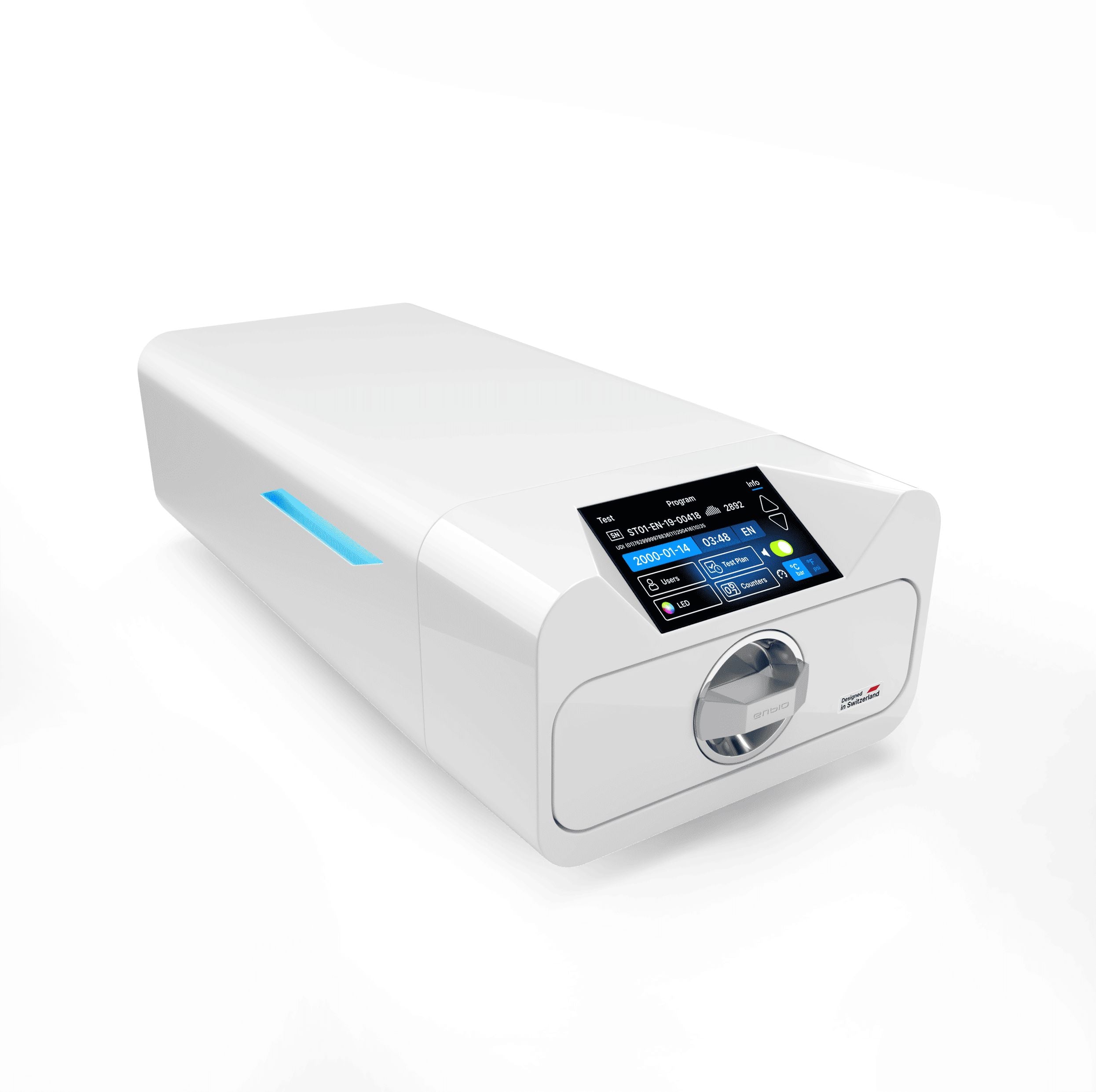
The Enbio S Class B autoclave earns the top spot because it solves the biggest frustration most clinics face: waiting for sterilization cycles to finish. Traditional tabletop autoclaves can take 45–60 minutes per cycle, but this unit completes a full Class B sterilization cycle in about 15 minutes. That difference dramatically changes workflow. Instruments move through sterilization faster, which means fewer backups and smoother patient scheduling throughout the day. That means it can safely sterilize wrapped instruments, hollow tools, and complex loads—exactly what dental practices require. The unit is also FDA cleared, giving clinics confidence that it meets strict U.S. medical device standards.
Another reason it stands out is its extremely compact design. Many Class B autoclaves are bulky countertop machines. The Enbio S is small enough to sit comfortably on a workstation, yet powerful enough to run multiple sterilization cycles per hour. Its touchscreen interface keeps operation simple, while automatic online cycle records make compliance and documentation easier. Capacity is smaller than that of large dental sterilizers, but the ultra-fast cycles compensate for it. While bigger machines sterilize more instruments per cycle, they often take much longer. The Enbio S can complete several cycles in the same time, keeping instrument turnaround fast and efficient. For clinics that want medical-grade sterilization, exceptional speed, and a compact footprint, this machine stands out as the best overall choice. At around $3,898, it also costs significantly less than many Class B autoclaves while still delivering professional performance.
Why Dentists Trust It
- ✔ 5-star rated autoclave
- ✔ Fastest Class B cycle in the industry
- ✔ FDA cleared for U.S. medical standards
- ✔ Swiss-engineered reliability
- ✔ Compact enough for any workstation
- ✔ Automatic digital cycle documentation
Noteworthy
- ~ 15-minute total cycle time
- ~ Award-winning modern design
Midmark M11 UltraClave Automatic Sterilizer
Runner-Up
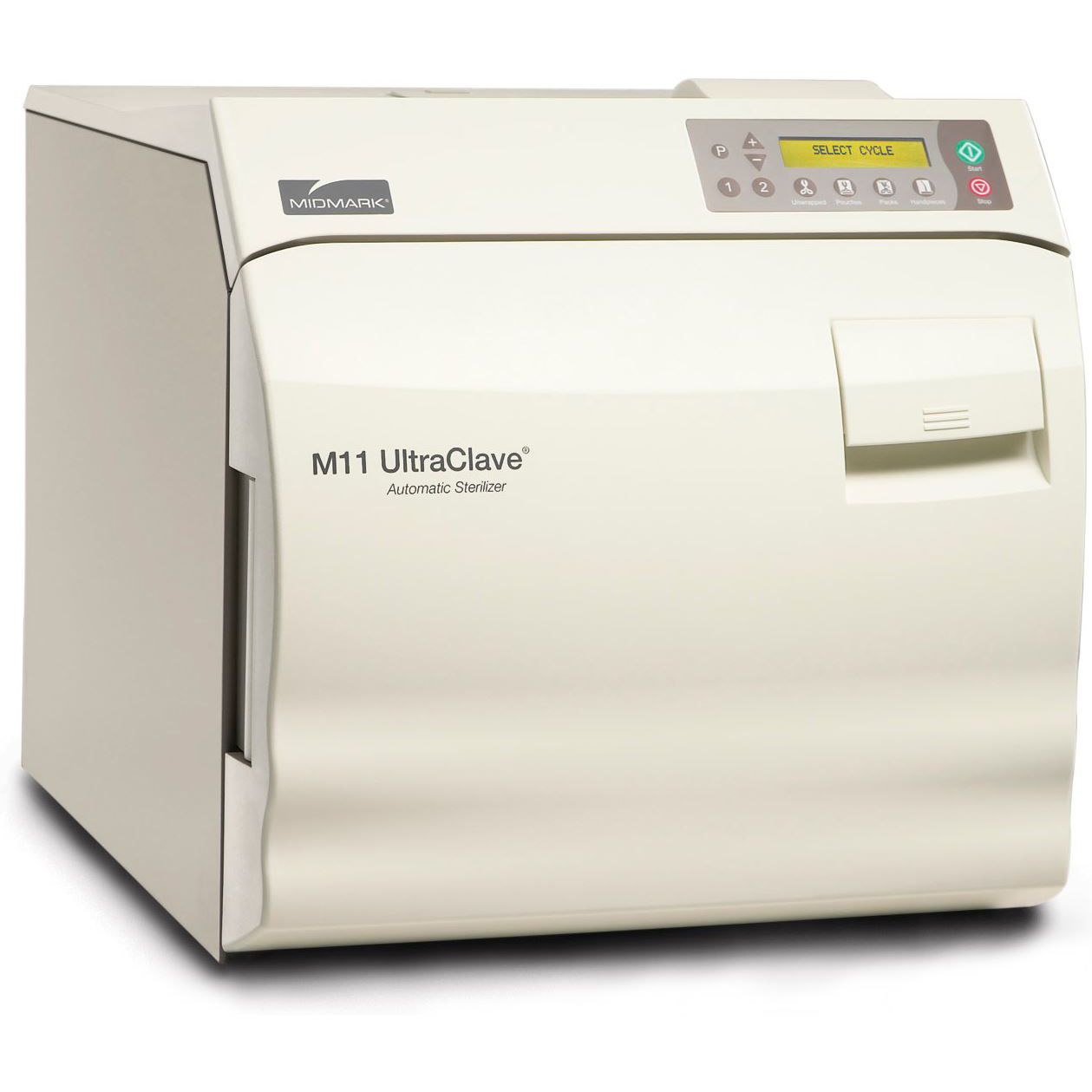
If you walk into 100 dental clinics in the U.S., the vast majority will have a Midmark M11 UltraClave. And that is why it easily earns the runner-up position. This sterilizer has one of the largest chambers of any standard countertop dental autoclave, measuring 11″ × 18″. That extra space allows practices to sterilize larger instrument packs and more cassettes in a single cycle, which is exactly why it has become a common sight in busy dental sterilization rooms. The automatic door system quietly opens at the end of each cycle, allowing steam to escape and helping instruments dry faster. The system also includes pre-programmed cycles for pouches, packs, handpieces, and unwrapped instruments, so staff can select the correct sterilization process with minimal setup.
The sterilizer also includes self-programming options for clinics that need custom cycle parameters. This balance of capacity, reliability, and ease of use is why the M11 has long been considered one of the most trusted sterilizers for dental practices. Compared with the best overall Enbio S, the Midmark M11 focuses more on large load capacity rather than ultra-fast cycles. A cycle may take longer, but the ability to sterilize bigger instrument loads in one run makes it ideal for busy practices that process many instruments throughout the day. For clinics that want a proven, high-capacity sterilizer trusted by dentists worldwide, the Midmark M11 remains one of the safest choices available.
Why Dentists Trust It
- ✔ Large 11″ x 18″ chamber capacity
- ✔ Automatic door-opening for dry time
- ✔ Pre-programmed for all tool types
- ✔ Standard in thousands of US clinics
Noteworthy
- ~ Proven longevity and durability
- ~ Largest standard countertop chamber
Tuttnauer T‑Edge 10 Autoclave
Best Modern Class B

The Tuttnauer T-Edge 10 stands out as one of the most advanced Class B tabletop autoclaves available for dental practices today. Tuttnauer has been manufacturing sterilization equipment for decades, and the T-Edge series reflects that experience with a machine designed for reliability, automation, and modern connectivity. One of the biggest advantages of the T-Edge 10 is its fully automated operation. With several one-button sterilization programs already built in, staff can start a cycle quickly without needing to adjust complicated settings. The chamber holds up to five trays of instruments, giving practices the ability to process multiple cassettes and packs in a single cycle. For busy clinics, that larger capacity helps keep instrument turnover running smoothly throughout the day.
Another feature that separates this autoclave from many traditional units is its advanced monitoring and documentation system. The sterilizer includes Wi-Fi connectivity, USB ports, and Ethernet capability, allowing clinics to track sterilization cycles, store records, and monitor the machine remotely. Tuttnauer also built this unit with automatic water management, meaning the system can fill and drain water automatically rather than requiring staff to manually empty reservoirs after each cycle. Combined with the large 110-degree door opening and intuitive touchscreen controls, daily operation becomes faster and more convenient. Compared with the Midmark M11 runner-up, the T-Edge 10 focuses more on modern technology and automation rather than maximum chamber size. And while the best overall Enbio S emphasizes ultra-fast cycle times, the T-Edge offers a balance of capacity, smart connectivity, and dependable Class B sterilization performance. For clinics looking for a modern Class B sterilizer with strong capacity and advanced monitoring features, the Tuttnauer T-Edge 10 remains a highly capable option.
Why Dentists Trust It
- ✔ Wi-Fi, USB, and Ethernet connectivity
- ✔ Automatic water fill and drain management
- ✔ Large 110-degree door opening
- ✔ One-button automated sterilization cycles
Noteworthy
- ~ Remote monitoring via smart device
- ~ 5-tray capacity for high throughput
ORILAO JY-16 Class B Autoclave
Best Budget Class B

Not every clinic wants to spend four or five thousand dollars on a sterilizer. Some smaller practices simply need a reliable Class B autoclave that meets sterilization standards without the premium price tag. That is where the ORILAO JY-16 becomes a practical option. The unit performs three pre-vacuum cycles and one post-vacuum drying phase, helping reduce residual moisture after sterilization. The chamber size is 16 liters, which is slightly smaller than larger clinic autoclaves but still large enough for everyday instrument loads in a small practice or treatment room.
The sterilizer also includes automatic digital controls, making it easy to select cycles from the LED display without complicated setup. Safety and validation features are also included. The unit supports Bowie-Dick, Helix, and Vacuum tests, which are commonly used to verify that vacuum sterilization is functioning correctly. Compared with the best overall Enbio S, this autoclave focuses on affordability rather than speed and advanced design. Still, for clinics that want true Class B vacuum sterilization at a much lower cost, the ORILAO JY-16 is one of the most affordable entry points available. Since this unit is sold under the Getidy brand, it’s also worth mentioning that Getidy has become a recognizable name in budget-friendly dental sterilization equipment. Their tabletop autoclaves are widely used by smaller clinics, tattoo studios, and training labs that need Class B sterilization without the high price of premium brands.
Why Dentists Trust It
- ✔ Professional Class B at budget price
- ✔ Triple pre-vacuum pulse technology
- ✔ Supports Helix and Bowie-Dick tests
- ✔ Digital LED cycle tracking
Noteworthy
- ~ 16L chamber for light instrument loads
- ~ Most affordable entry for startups
Tankredrug 23L Class B Autoclave
Best Capacity Value

At $1,980.99, the Tankredrug 23L Class B Autoclave stands out for one simple reason: capacity for the price. Most sterilizers with a 23-liter chamber sit in the $4,000–$6,000 range, yet this one gives you similar space for roughly half that cost. Compared with the previous 16-liter budget autoclave, the Tankredrug model gives you significantly more room for instrument pouches and cassettes in each cycle. That extra space means fewer cycles during the day, which can save time in a busy sterilization workflow. It also includes a built-in printer and USB export for sterilization records, something many clinics specifically look for when documenting sterilization cycles. For a machine under $2,000, those features add serious value.
Why Dentists Trust It
- ✔ Massive 23-liter chamber for price
- ✔ Built-in printer for audit records
- ✔ USB data export functionality
- ✔ High-capacity throughput workflow
Noteworthy
- ~ Best price-per-liter value
- ~ Built-in mechanical door lock
EustomA 23L Class B Autoclave
Best Precise Steam Control

At $1,997, the EustomA 23L Class B Autoclave sits almost at the same price point as the previous Tankredrug model, but it offers a similarly large 23-liter chamber, which is the real attraction here. That size gives you plenty of room for multiple instrument pouches or cassettes in a single cycle, helping reduce how often the sterilizer needs to run during the day. Another small advantage is the separate steam generator and heating coil system, which allows the machine to control steam production more precisely while reducing water consumption. The chamber and cover are also built from 2 mm SU304 stainless steel, designed to handle the high pressure of repeated sterilization cycles. For clinics looking for a large Class B sterilizer around the $2,000 mark, this model offers similar capacity to far more expensive units, making it a practical option for practices that want strong throughput without the premium price.
Why Dentists Trust It
- ✔ Separate steam generator system
- ✔ High-grade SU304 stainless steel
- ✔ Eco-friendly water reduction design
- ✔ Full automatic one-touch operation
Noteworthy
- ~ 2mm thick reinforced chamber
- ~ Extremely precise steam output
VIBURISH 8L Steam Sterilizer Class B
Best Aesthetic Design

This one looks different the moment you see it. The VIBURISH 8L Class B autoclave has a polished silver-and-black finish that feels far more refined than most small sterilizers. It’s compact, neat, and almost elegant on a countertop. The kind of machine someone might choose when space matters and appearance matters too. That makes it a good fit for solo practitioners, aesthetic clinics, tattoo studios, or nail technicians who want a sterilizer that doesn’t dominate the workspace. With an 8-liter chamber, it’s clearly designed for small batches of instruments, not the heavy loads you’d see in a busy dental sterilization room. But for a professional working alone or with limited instruments, that smaller chamber can actually be convenient.
Technically, it still delivers Class B sterilization using three pre-vacuum pulses and vacuum drying, allowing steam to penetrate hollow instruments and wrapped tools properly. The LCD screen shows cycle data in real time, and the built-in printer records sterilization cycles automatically. Safety systems also monitor temperature, pressure, and overheating. Compared with the best overall Enbio S, the VIBURISH is not built for ultra-fast cycles or high daily throughput. But that’s not the purpose of this machine. This autoclave is for professionals who want a compact, attractive Class B sterilizer that fits neatly into a small workspace while still meeting proper sterilization standards.
Why Dentists Trust It
- ✔ Polished silver/black aesthetic
- ✔ Full Class B vacuum performance
- ✔ Real-time LCD data display
- ✔ Safety sensors for overheating
Noteworthy
- ~ Smallest countertop footprint
- ~ Ideal for aesthetic/solo clinics
BONEW GETIDY 18L Class B Autoclave
Best Practical Mid-Size

At first glance, this green-and-white tabletop autoclave looks almost identical to the popular Getidy-style machines used in many small clinics and studios. The BONEW GETIDY 18L Class B autoclave has that same practical design: compact, straightforward, and clearly built for everyday sterilization rather than showpiece aesthetics. With an 18-liter chamber, it sits right in the middle of the tabletop sterilizer range. That makes it noticeably larger than the smaller 8-liter units designed for very light workloads, while still remaining compact enough for a countertop in a small treatment room. In practical terms, this size works well for solo practitioners, small dental or medical rooms, tattoo studios, or cosmetic clinics that need to sterilize several instrument pouches per cycle without running a large clinic sterilizer.
Functionally, it checks the boxes that many professionals look for in a budget Class B machine. It uses pre-vacuum sterilization, includes vacuum drying, and supports verification tests such as Bowie-Dick, Helix, and vacuum tests. The built-in printer and USB export for cycle records are also useful for maintaining sterilization documentation. One feature that stands out is the pipeline “WASH” cleaning program, designed to flush the internal tubing to reduce blockages over time. For professionals who want a mid-size Class B sterilizer around the $1,700–$1,800 range, this machine offers a practical balance: more capacity than compact units, yet far less expensive than premium dental sterilizers.
Why Dentists Trust It
- ✔ Practical mid-range 18L capacity
- ✔ Built-in pipeline cleaning program
- ✔ Supports standard verification tests
- ✔ Integrated USB and thermal printer
Noteworthy
- ~ Prevents tube blockages via “WASH”
- ~ Best balance of price and volume
lass B autoclaves use vacuum cycles to remove trapped air from instruments before sterilization, such as from dental handpieces and fine lumens
For dentistry, a Class B autoclave is the standard. Unlike Class N or Class S units, it uses pre‑vacuum technology to remove air from the chamber before steam is introduced. That vacuum is critical. Without it, steam cannot penetrate hollow instruments like handpieces or wrapped cassettes. And if the steam can’t reach every surface, sterilization fails. That’s not a risk worth taking.
Equally important is the drying cycle. Instruments should come out of the chamber completely dry, because even a trace of residual moisture can compromise sterility or damage packaging. Temperature and pressure precision matter, too. Most dental autoclaves must reliably achieve 121°C and 134°C cycles—the standard sterilization ranges for dental instruments. On top of that, a good machine will have programmable options for different loads and provide consistent pressure monitoring to prevent cycle failures.
Finally, compliance isn’t just paperwork—it’s protection. Modern dental autoclaves should include data logging through USB or an integrated printer. That record of each cycle—time, temperature, pressure—is what you’ll need if you’re ever audited. Pair that with a stainless‑steel chamber for durability and easy cleaning, and you’ll have a machine built for the daily demands of a dental practice.
Every day, we’re sterilizing handpieces, scalers, surgical instruments, and anything else that enters a patient’s mouth. That means we need a machine that doesn’t just “heat and pressurize.” It must meet strict clinical requirements so we can trust every cycle, every load, and every result.
A Class B autoclave uses pre-vacuum cycles to remove air from hollow instruments—handpieces, lumens, traps where pathogens hide. Without that vacuum phase, steam never fully penetrates. And partial penetration is not sterilization. It’s risk disguised as compliance.
One more thing many buyers miss: cycle validation and traceability.
If your unit cannot log sterilization data or support routine spore testing… you have faith, not proof. And when patient safety depends on proof, “good enough” stops being an option that leaves the room feeling quietly uneasy long after the instruments are put away.
Class B autoclaves use vacuum pulses to clear air pockets before steam enters. Without that step, hollow instruments become blind spots. And blind spots are where infections survive.
Class B means active air removal. It means steam reaches into lumens, hinges, and turbine heads. Without that vacuum phase, you can hit 134 °C and still miss the pathogen sitting in trapped air. That’s the uncomfortable truth behind the glossy language.
. That vacuum step is what allows steam to reach the inside of hollow instruments. Without it, sterilization is incomplete—even if the temperature looks correct on the screen.
A true Class B cycle eliminates air from hollow structures—
One more issue many people overlook: proof. If your autoclave cannot record cycles, print reports, or support biological testing, you cannot prove sterilization. And in a regulated environment, “I think it ran correctly” is not protection.
Not every “steam sterilizer” is safe for clinical use. That line alone confuses many buyers. A true medical autoclave must clearly state Class B. If it does not, you should stop and ask why.
A Class B autoclave removes air before steam is introduced. This allows steam to reach deep into instruments where bacteria and viruses hide. Without vacuum removal, high temperatures alone are not enough.
There is also the issue of documentation. If the autoclave cannot store cycle records or show failed cycles clearly, you have no trail of proof. And when something goes wrong, that absence becomes its own problem. In sterilization, silence is not neutral. Silence is risk that waits quietly in the background.
Best overall: https://www.amazon.com/Tuttnauer-T-EDGE11S-Automatic-Autoclave-Sterilizer/dp/B0BFJRG24R/ref=ast_sto_dp_puis
When Class N Is Used
Class N is for basic, surface-level sterilization only.
It is used when:
Instruments are solid
Instruments are unwrapped
There are no internal channels
There is no blood or invasive tissue exposure
Typical environments:
Beauty salons (metal tweezers, scissors)
Nail bars (solid tools only)
Pedicure clinics (non-hollow tools)
Some laboratories (simple metal instruments)
Veterinary grooming (not surgical work)
Why the limits exist:
Class N has no vacuum system. Steam enters by gravity and pushes air downward. If air gets trapped anywhere inside an instrument, steam cannot reach the surface behind it. Sterilization looks fine on paper, but it is not complete in practice.
So the rule is simple:
If steam cannot reach every surface, it cannot sterilize every surface.
That’s why Class N is never suitable for dentistry, tattooing, surgery, or any blood-contact environment unless all tools are solid and disposable—which is rare.
When Class S Is Used
Class S is a restricted middle category.
It is designed for:
Specific tools only
Approved by the manufacturer
With limited vacuum support
For pre-defined loads
Typical environments:
Small private clinics with fixed tool sets
Minor outpatient rooms
Certain podiatry setups
Specialized labs
Cosmetic medical practices with limited instrument types
The risk with Class S:
Each model is approved for only certain instruments. If you change tools and don’t re-verify compatibility, your sterilization process becomes invalid without you realizing it.
Class S works only when:
The tool list never changes
The staff are fully trained
Every upgrade is re-approved
Logs are tightly controlled
In real-world practices, that level of control usually breaks down over time.
Class N (Non-Vacuum)
This is the most basic class.
What it sterilizes: Solid, unwrapped instruments only
What it cannot sterilize: Hollow instruments, handpieces, wrapped packs, porous materials
How it works: No vacuum. Steam simply pushes air downward by gravity
This class is not suitable for dentistry or medical procedures involving blood. If steam cannot enter internal channels, bacteria and viruses can survive even at high temperatures. This is the lowest safety level—and often the cheapest for a reason.
Class S (Specified Load)
This is a limited middle category.
What it sterilizes: Only the specific instruments listed by the manufacturer
What it cannot sterilize: Anything outside that narrow approval
How it works: Partial vacuum or modified air removal
Class S units vary widely. One brand may allow certain wrapped tools, another may not. The problem is lack of universality. You must check every instrument type against the machine’s approval list. In real practices, that creates room for costly mistakes.
Class B (Medical-Grade Standard)
This is the gold standard for dentistry and medicine.
What it sterilizes:
Solid instruments
Hollow handpieces and lumens
Wrapped packs
Porous materials (textiles, surgical sets)
How it works: Multiple powerful vacuum pulses remove all air before steam enters
This is the only class that guarantees full steam penetration in every instrument type. When manufacturers say “hospital-grade,” this is what they’re supposed to mean—even if they don’t always say it clearly.
Why This Matters Clinically
Blood changes everything. Once blood is involved, you’re dealing with real transmission risk—not a theoretical one. Proper Class B sterilization reduces cross-infection risk by 99.9%+ when used correctly. But only if:
The machine is truly Class B
Cycles are validated
Biological testing is performed
Records are stored and traceable
Without that chain of proof, the sterilization process becomes assumption-based. And assumptions have no place next to patients.
Bottom Line
Class N: Basic, not for dental or surgical use
Class S: Limited, manufacturer-restricted
Class B: Full medical and dental standard
Yes—from a pure safety standpoint, a nail salon would absolutely be better off using a Class B autoclave. That doesn’t mean Class N is illegal for salons in many regions. It means Class B is safer, broader, and future-proof.
Here’s the clean logic.
Nail salons still break skin. Cuticles bleed. Clippers nick. Tools slip. Once blood appears—even rarely—the risk category changes. Bacteria, fungi, and bloodborne viruses don’t care whether the setting is a hospital or a beauty salon.
The difference between the classes becomes very practical:
Class N:
Solid tools only. Unwrapped. No vacuum. Steam may not reach tight joints, hinges, or textured surfaces.Class B:
Full vacuum. Full penetration. Works on everything—solid tools, wrapped packs, porous items, and instruments with micro-gaps.
Nail tools may look “solid,” but in real life they have:
Hinges
Serrated edges
Micro-cracks from wear
Biological debris that hides in corners
A Class B cycle removes air first. That guarantees steam contact on every surface. A Class N cycle hopes steam gets there.
So yes—Class B is objectively safer for nail salons, even if not always required by regulation.
The real difference comes down to this:
Class N = minimum compliance
Class B = maximum protection
Many salons choose Class N because it’s cheaper. Some choose Class B because they don’t want to rely on “probably clean” when clients’ skin is involved. That decision alone can separate a basic salon from one that takes infection control seriously… even when inspectors are not in the room.
fungal infections spread so easily through poor tool sterilization
Could a Cheap One Still Be Safe?
Safe for:
Nail salons
Beauty clinics
Solid tools only
No wraps
No hollow instruments
Minimal blood exposure
Not safe for:
Dentistry
Tattooing
Surgery
Podiatry
Any blood-heavy environment
NNNNNN
Most